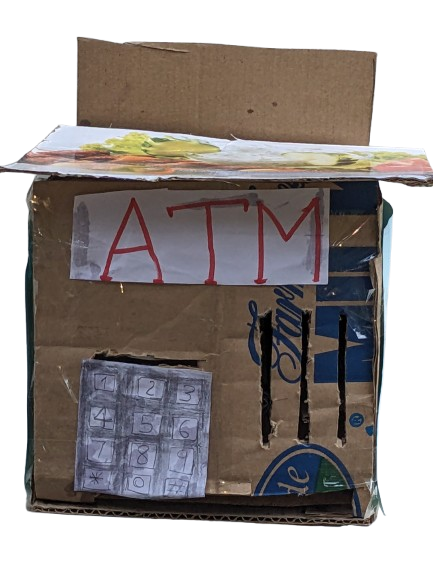
ATM Prototype
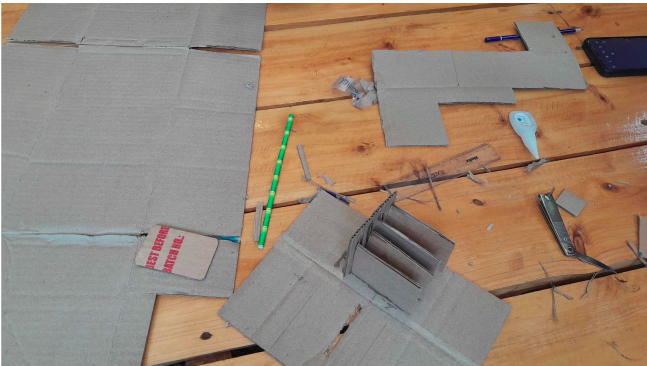
We developed a prototype of an Automated Teller Machine (ATM) using simple materials like boxes,
scissors for cutting
, glue and masking tape to attach the materials together to simulate the basic functionality of real
ATMs. The primary
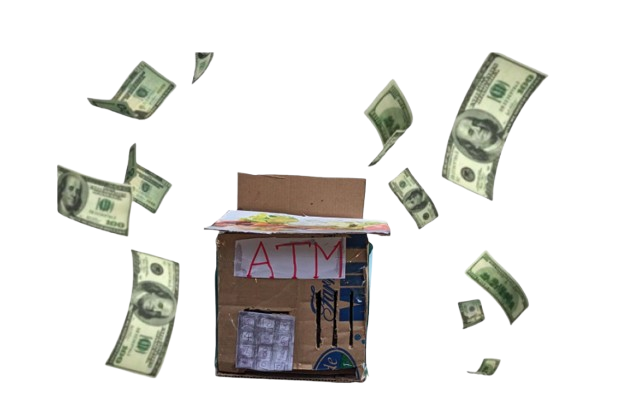
function of this prototype is to dispense money when an external force is applied, simulating the user’s
actions. It is
a basic prototype that demonstrates how users can interact with a machine to withdraw cash quickly and
easily.
The prototype relies on fundamental mechanical principles, including Force and Motion. When the user
pushes an external component
(a card), it triggers a mechanism that moves the money out of the box.
The prototype is manually powered, making it highly energy-efficient, as it does not rely on electricity
or batteries. From a user-centered design perspective, the machine is straightforward and easy to use.
The action required (pushing) is intuitive, making it accessible while also demonstrating how machines
use physical input to produce output.
The prototype successfully demonstrates the concept of an ATM, with users able to push using a card and
receive money. The biggest challenge was aligning the internal parts correctly so that the money came
out smoothly leading to the dispensing not always being smooth. Additionally, the design could be more
robust, as the use of boxes makes it fragile.
If we were to improve the project, we would use smoother materials for internal rollers and possibly add
a spring mechanism for more realistic feedback, we’d also reinforce the structural integrity with
stronger materials to make them more durable over time.
Conclusion
The ATM prototype demonstrates a basic mechanical system that dispenses money upon user interaction.
While it is limited by its simplicity and materials, it provides a foundation for understanding the core
concepts of force, energy transfer, and user-centered design. Future improvements would focus on
durability, smooth operation, and better user guidance.
This project taught us how basic mechanical systems work and how we can build functional prototypes with
everyday materials.





.jpg)